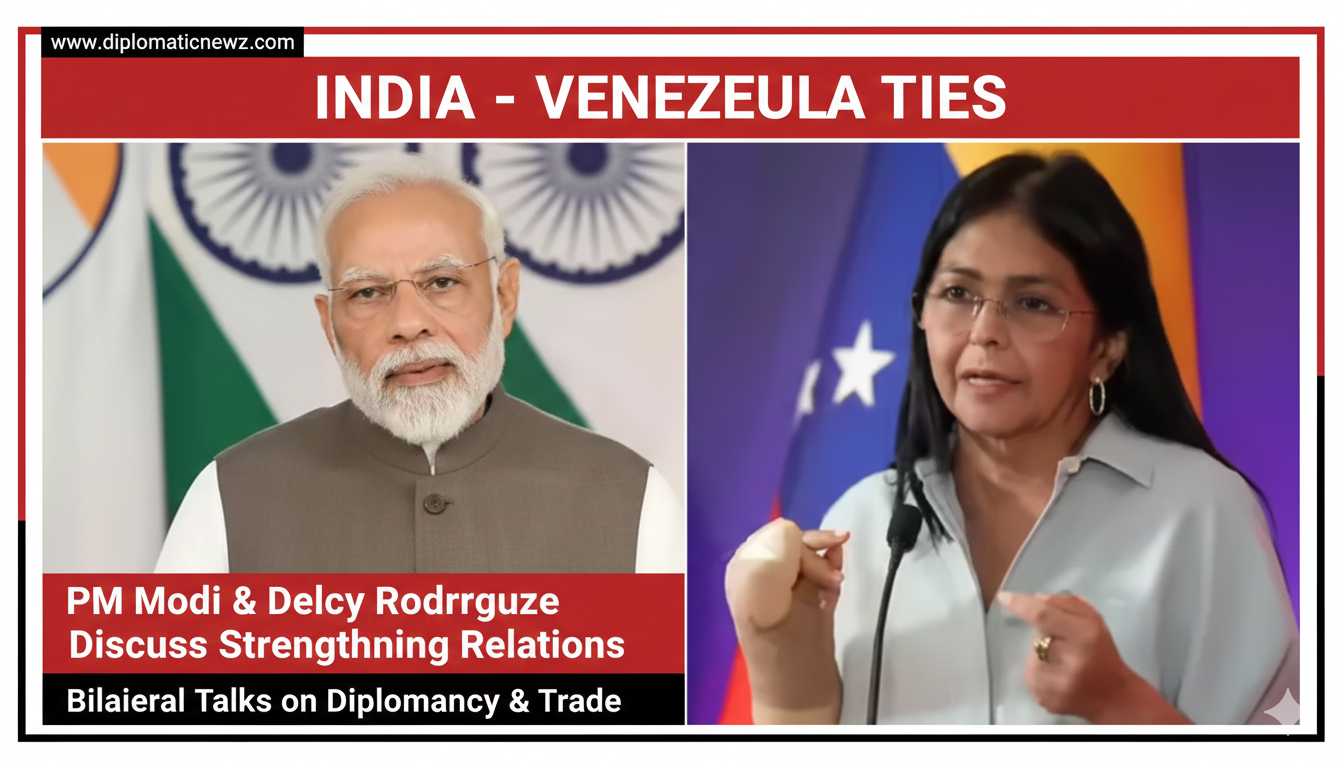

PM Modi Holds Talks with Venezuela’s Acting President Delcy Rodríguez, Agrees to Deepen Bilateral Partnership. One-on-one talks mark first time top officials meet after Rodriguez stepped into temporary leadership. That came once upheaval shifted power in Venezuela
New Delhi January 30 2026 International Relations
Friday brought a phone call between Prime Minister Narendra Modi and Venezuela’s acting leader, Delcy Rodríguez. This talk stands as their initial top-tier exchange since she stepped into the temporary role early this month. Contact unfolded through voice lines rather than in person. Leaders connected across continents, one in Asia, the other in South America. No prior dialogue at such levels had taken place after her appointment. The moment marked quiet diplomacy without public fanfare. Communication happened remotely, bypassing traditional meetings. Timing followed just days after her rise to interim authority. Exchange carried weight despite its distance format. Talks opened a channel where none existed before.
Commitment to Stronger Ties
In a post on social media platform X (formerly Twitter),Prime Minister Modi stated, “Spoke with Acting President of Venezuela, Ms. Delcy Rodríguez. We agreed to further deepen and expand our bilateral partnership in all areas, with a shared vision of taking India-Venezuela relations to new heights in the years ahead.”
Even amid Venezuela’s shaky politics, India keeps talking. Through it all, New Delhi chooses dialogue over distance. Not backing down, they hold steady with quiet contact. When others pull away, India stays at the table. Stability isn’t guaranteed, yet ties remain open. While chaos flickers nearby, diplomacy moves slowly forward.
Energy Security and Strategic Interests
A turning point shapes up for India’s plans on keeping energy steady. Not just any nation, Venezuela holds more known oil than anywhere else on Earth – part of OPEC, too. Instead of standing apart, ties here could shift how India handles its need for imported oil, since nearly nine out of ten barrels come from abroad.
Key areas identified for bilateral cooperation include:
Oil arrives in India from many places around the world. Though some nations face supply issues, shipments still flow in. One country might slow output, yet another steps up. Dependence on any single region drops when options spread wide. Turmoil elsewhere does not stop tanks here from filling. Stability matters less now, because backups exist. Crude keeps moving despite roadblocks far away.
Defence Cooperation Exploring Opportunities for Strategic Partnerships
India Pharmaceutical Manufacturing Strength
Farming know-how spreads through new tools that help grow more food. With better methods, crops survive tough weather. Knowledge travels fast when farmers connect across regions. Stronger harvests come from smart choices in planting and care. Food stays safer when storage improves alongside growing skills
Background: Venezuela’s Political Transition
January 5, 2026 marked the day Rodríguez took office as Venezuela’s acting president. Though she is fifty six years old, her background runs deep in labor law and public service roles. A sudden shift unfolded when U S forces seized Nicolás Maduro during a covert mission overseas. After that, he ended up held in New York under accusations tied to drug related terrorism. Because of this, leadership passed to her without delay.
One sudden move came from Venezuela’s highest court, putting Rodríguez in charge. Military support followed fast – backing rolled in from key power centers across the state. Then the defence chief, Padrino, stepped forward alongside top figures, voices aligning with the new authority. Their statements made clear where they now stood.
India’s Measured Response
Back at the start of January, India’s Ministry of External Affairs said what was unfolding in Venezuela worried them greatly. Peaceful talks should fix it, they stated. Tensions there had drawn serious attention. A calm path forward mattered most.
“India reaffirms its support to the well-being and safety of the people of Venezuela. We call upon all concerned to address issues peacefully through dialogue, ensuring peace and stability of the region,” the MEA statement had read.
Now reaching out from Caracas, India’s embassy stays close to its people across Venezuela. Help arrives quietly when required, through steady consular support. Connections hold firm, even at a distance.
Geopolitical Significance
Now comes a chat between Modi and Rodríguez – quiet, deliberate. It shows how India keeps talking, no matter the politics on the other end. Yet every word serves a purpose: security first, trade steady. Not loud, never rushed. This is diplomacy that watches both ends at once.
With this engagement, India signals its intention to:
Continue energy cooperation with Venezuela despite political uncertainties
Maintain its traditional diplomatic ties with Latin American nations
Friendly ties with Washington, yet maintaining contact with Caracas despite tricky global tensions. Shifting pressures from north and south shape how connections hold. Staying close to one doesn’t mean cutting off the other. Outside forces pull hard – still, links survive through careful steps. Not choosing sides keeps room to move when things change
Counter Chinese influence in the Latin American region
Historical India-Venezuela Relations
Years stretch back between India and Venezuela, tied by quiet diplomacy. Crude oil from South America once filled gaps when supplies elsewhere ran short. Energy needs in New Delhi found a match in Caracas, especially when global flows tightened. Cooperation grew around black gold, steady but never loud.
Far beyond just power projects, they’ve worked together on everything from reshaping the United Nations to strengthening ties among Global South countries – tied by common ground as emerging economies. Their partnership shows up wherever development goals overlap.
Looking Ahead
Friday’s talk offered few specifics beyond promises to strengthen relations, yet the meeting marks a meaningful move in India’s growing efforts to build connections across Latin America.
One way or another, Venezuela’s shifting politics might just line up with India’s push to mix up its energy sources. Months ahead could bring quieter deals, maybe even new links beyond oil. Things change when needs overlap, especially if both sides see room to move.
Subscribe our newsletter to get latest Updates Diplomatic NEWZ

 By
By