
Winter weather hits 230 million people across the U.S., while over twelve scientists challenge what the president claimed about climate change
January 27 2026 Washington DC Climate and Environment
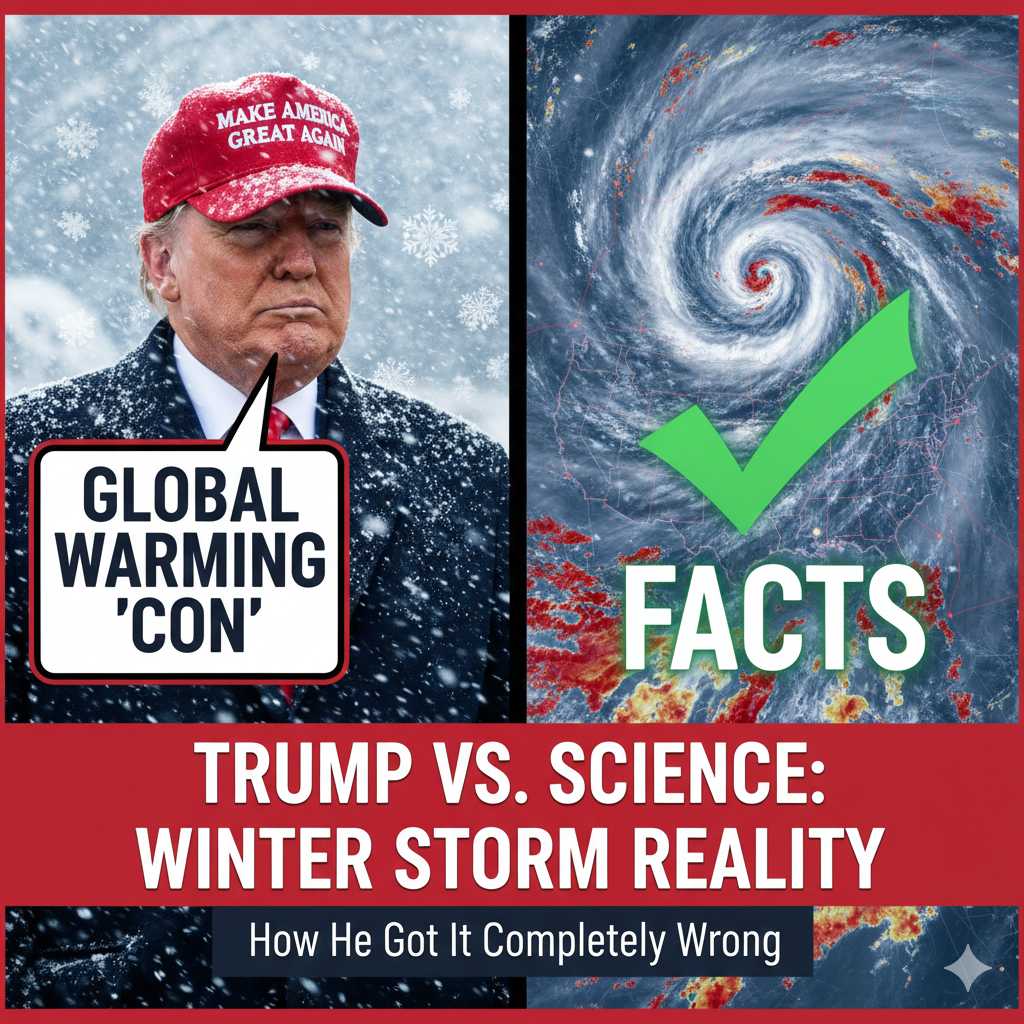
When a huge winter storm dumped heavy ice and snow across large parts of the U.S., Donald Trump pointed to the cold as if it disproved global warming – despite over a dozen climate experts saying that reasoning makes no scientific sense.
Trump’s Controversial Post
In a Truth Social post on Friday, January 23, Trump wrote: “Record Cold Wave expected to hit 40 States. Rarely seen anything like it before. Could the Environmental Insurrectionists please explain – WHATEVER HAPPENED TO GLOBAL WARMING???”
Falling right before Winter Storm Fern swept through, the alert warned of chaos stretching across dozens of states – over two hundred thirty million caught in its path. Ice piled up like disaster waiting to happen, forecasters calling it historic from Santa Fe clear into Boston. Roads turned slick, power lines sagged under the weight, warnings flashing nonstop as far as Maine.
The Science: Weather vs. Climate
Right away, climate experts challenged what the president said, pointing out he mixed up brief weather shifts with patterns that unfold over decades. Some stressed it wasn’t about one storm or hot summer but steady changes seen across generations. Others noted how confusing daily forecasts with global trends leads to flawed conclusions. A few highlighted records showing warming didn’t pause even when winters felt colder. Many mentioned models built from real data, not guesses. What stood clear was a gap between public statements and scientific evidence.
A shift in freezing winds hitting the U.S., according to Dr. Steven Decker who leads the meteorology program at Rutgers, shows short-term conditions – what we call weather. Climate, on the other hand, builds slowly, shaped by global temperature patterns measured over years. That difference slipped past Trump’s comment completely.
“This social media post crams a remarkable amount of inflammatory language and factually inaccurate assertions into a very short statement,” noted climate scientist Daniel Swain of the California Institute for Water Resources. “First of all, global warming continues – and has in fact been progressing at an increased rate in recent years.”
The Global Picture: 2025 Was Third-Warmest Year on Record
Not at odds with climate heating, new numbers actually back it up. Last year came in third hottest on record according to NOAA, dating back to 1850. Every single one of the ten most scorching years has shown up since 2015, within a timeline stretching nearly two centuries. Despite pauses some claim, the climb keeps rising.
Key climate facts that contradict Trump’s claims:
Last time Earth saw such heat was never – recent years claim hottest spots ever measured. Temperature climbs now outpace earlier trends by a wide margin
Last time you shivered through a milder-than-usual January? That wasn’t your imagination. Since 1995, average winter warmth across Earth has climbed 1.3 degrees Fahrenheit. Before last year, the one just prior held the title of hottest winter ever measured. Records keep shifting when cold snaps fade faster than they used to
Winter temperatures across the East Coast have climbed slowly through 100 years, records say. Not long ago, colder seasons were sharper, deeper. Now warmth slips in more often, bit by bit. Scientists pulled numbers from old logs, stations, satellites – each year adding up differently than before. What used to be normal frost now feels softer, less certain. This shift didn’t shout; it whispered through decades
Last month, Earth saw its fifth-warmest December ever recorded – conditions matched that pattern across the U.S., too. Heat climbed just behind four earlier Decembers worldwide. Temperatures held above average from coast to coast locally. Data now lines up with long-term warming trends seen over recent decades. Records stretch back well over a hundred years at this point
It’s Not Actually That Cold—By Historical Standards
That chill sweeping through? Trump called it a sight few have witnessed, almost unheard of. Yet experts point out something different – history tells another story. While heat has climbed over the years, making frost feel shocking now, old data whispers otherwise. Numbers from official sources reveal deeper freezes long before our time.
Northern Illinois University meteorology professor Victor Gensini noted that “truly historic cold waves, like those in 1978–79, 1983–85, or earlier decades, were often colder and more persistent over large regions. We are also less accustomed to severe cold now because winters overall are warmer than they were several decades ago.”
Numbers tell the tale. Among U.S. weather stations logging fifty years or more, just forty-five new cold records popped up last January. Meanwhile, heat records hit one thousand ninety-two.
The Polar Vortex Connection
Funny thing, experts now link wild weather – like this season’s deep freeze – to rising global temperatures. Studies show warmer conditions might loosen the grip of the polar vortex, a swirling band of high-speed wind holding icy northern air in place, letting it spill into lower regions instead.
Falling somewhere between winter extremes, Dr. Daniel Swain pointed out how thick ice buildup often follows when mild air pushes against frigid polar winds – this shift demands much of the sky hold temps above freezing. Instead of blending smoothly, these layers clash, setting the stage for icy outcomes.
Up high, past twenty miles above us, something odd is happening in the sky. That swirling cold air up there – called the polar vortex – is wobbling. Warmer patterns have thrown it off balance. Scientists tracking weather noticed this shift. It helps explain why icy winds are hitting now. The roots of our chilly days stretch far beyond where planes fly. A tug from above reshapes what feels like winter down here.
The Global Context: U.S. Is Only 2% of Earth’s Surface
Only a tiny slice of the planet belongs to the United States, researchers pointed out. While chill settled into some eastern spots, warmth held strong across many western regions this season. Not every corner followed the same pattern, they noted.
Not far into the storm, temperature patterns revealed a chilly grip across much of the U.S., covering roughly sixty percent of its area. Elsewhere, though, warmth held on, stretching across continents in a way that fits what scientists have been tracking for years. Outside North America, above-average heat stayed dominant, quietly lining up with long-term shifts seen worldwide.
Trump’s History of Climate Skepticism
Winter storms have drawn skeptical comments from Trump before. Cold days seem to spark his doubts about climate change, just like they did back in 2019 and again in 2023. His social media posts often link frosty conditions to broader scientific claims.
Fall arrives just as changes unfold under Trump’s leadership – policies once aimed at protecting the environment now face reversal
- One cold January morning in 2026, the United States stepped away from the Paris Climate Agreement. This move set it apart – no other nation had left the deal meant to cap rising temperatures at 1.5 degrees beyond historic averages. While others kept working within the framework, Washington walked out. The decision marked a shift, standing alone on a path diverging from global efforts. Despite years of negotiations leading up to it, the exit took effect without delay. Countries watching closely noted the change. Efforts to slow climate disruption continued elsewhere, just not led by America anymore
- EPA Website Removes Fossil Fuel References
- Funding for climate science labs took a hit when the government moved to reduce support. NCAR, which studies weather patterns and atmospheric changes, now faces tighter budgets. Shrinking resources come after officials questioned long–term value of such programs. Some agencies saw reductions while others were left untouched. Decisions stirred concern among scientists tracking environmental shifts. Budget adjustments reflect shifting priorities across federal science spending
The Storm’s Real Impact
Far from keyboard arguments, ice snapped power lines from Texas to Maine. Though tweets flew hot, roads froze solid under silent trucks. Even as fingers pointed on screens, snow buried farms and cities alike. Not in forums but fields, the cold made its case brutally.
- More than 800,000 people lost power across southern states
- Last count showed seven lives lost
- Thousands of flights were cancelled
- 14 states and Washington D.C. declared states of emergency
- A heavy blanket of white covered sections of the Midwest, then pushed into the Northeast. Snow piled past twelve inches where it lingered through towns and roads. One region after another saw drifts rise above rooftops. Winter arrived fast in places that rarely feel such weight. The ground stayed frozen under relentless flakes
Folks in over ten states got emergency backing from President Trump. Where trouble hit, FEMA moved supplies ahead of time. People with gear and rescue skills were sent where needed most. Help wasn’t just promised – it was already on the ground.
What Climate Scientists Want People to Understand
Scientists studying weather patterns stress ideas different from Trump’s claims:
1. Global Warming Doesn’t Mean No Winter
Winter sticks around, even when scientists talk about warmer planet trends. What happens in one spot does not always match the big picture. Cold days still fit within shifting overall patterns. Planet–scale changes do not erase local chills. Long-term shifts differ from day-to-day feels.
2. Weather ≠ Climate
A day of rain doesn’t erase decades of shifting skies. What happens overhead today isn’t the same as what unfolds year after year on Earth.
3. Warmer Atmospheres Hold More Moisture
When the air heats up, it traps extra water vapor – so snowstorms might hit harder even if less often.
4. Extreme Events Can Increase
When temperatures climb, storms often grow stronger. Heavy downpours show up more often now than they once did. Heat waves linger longer, pushing limits on people and nature. Floods strike harder where rain overwhelms the ground. In dry places, lack of water stretches out season after season. Wildfires rip through forests with growing speed. Hurricanes arrive with deeper fury. These shifts trace back to changes sweeping across Earth’s climate.
The Bigger Picture
Steve Callahan, a climate expert quoted by TIME magazine, explained the fundamental concept: “Because climate change is ultimately a longer-term phenomenon, you can have blips around that trend; you can have ups and downs around a longer-term increase in temperature. So it’s totally reasonable for us to still have individual storms or individual weather events even though, overall, the planet’s climate is warming.”
Warming doesn’t pause just because snow falls somewhere. Evidence piles up through measurements gathered by NOAA along with NASA and climate teams across continents. This isn’t a sudden shift – it’s been building quietly behind every shifting season. Behind each report lies years of temperature records pointing one direction only. Even when cold snaps hit headlines, the broader trend keeps climbing without apology.
Subscribe our newsletter to get latest Updates Diplomatic NEWZ


 By
By